AgriBiz
Kashmir saffron reaches Dubai





Dr Zahoor Ahmed Rather
Prof Imtiyaz Tahir Nazki
Blossom at Risk
The global environmental agencies declared 2024 the hottest year and over the course of the last cjin88bet.oneentury, the average surface temperature of earth has increased, amounting to around 0.74 0C.As per the Economic Survey, India is the seventh most vulnerable country to climate change and faced seak168app.babyvere weather extremes, with 93% of days in 2024 marked by extreme climate events such as heatwaves, cyclones, and floods. As the world grapples with the phenomenon of climate change, one of the most visually striking yet often overlooked casualties is the floriculture industry. From tulips in the Netherlands to roses in Kenya, the delicatak168app.clube balance required for flower cultivation is being disrupted by rising temperatures, erratic weather patterns, and shifting ecosystems. The floriculture industry employs millions of people, from small-scale farmers in developing countries to large-scale exporters in Europe and Asia. The decline in floks168app.sitewer quality and quantity due to climate change could have far-reaching consequences not only affecting global flower supplies but also small-scale flower growers, being the backbone of this industry, and may be forced out of business. At present, 1191 growers registered with Department of Floriculture (J&K) are active in commercial floriculture business generating an income of Rs. 19.42 crores (2023-24) which is under threat due to climate change.
The Kashmir’s temperate climate, fertile soil, and glacial waters have nurtured a flourishing floriculture industry with an area of about 431.25 ha alone under gardens, parks and lawns, attracting tourists all over world. Kashmir once celebrated as the “Garden of Eden” foic88r its riot of colors and fragrances, isnow slowly turning into a battleground where nature and climate change are stuck in a grim struggle. Extreme weather events, like unseasonal frosts, irregular precipitation patterns, prolonged droughts and increased evaporation rates are becoming more frequent. One of the immediate consequences of climate change in Kashmir is the disruption of traditional weather cycles.
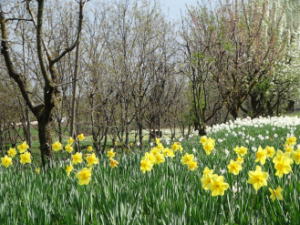
The most significant impacts of climate change are the alteration of crop blooming cycles. A shorter blooming season, improper floral growth and colour development, and insuic88fficient flowering are all problems associated with commercial flower cultivation, especially under open field conditions. Thus flower crops like tulip, marigold, gladiolus, annuals grown under open conditions will be greatly affected by these erratic weather changes. Among ornamental crops, flowering bulbs are considered as vital indicators of climate change due to their sensitivity to minor seasonal cues and temperature changes. Warmer temperatures are causing flowers to bloom earlier than usual, disrupting supply chains and affecting seasonal markets. Spring flowering bulbs viz., tulips, daffodils and crocuses are among the first plants to signal the onset of spring, have been observed blooming earlier than historical averages. Warmer winters haic88ve caused premature bud formation making them highly susceplr88tible to unexpected frost. Ornamentals such as tulips, daffodils, magnolia, irises which need chilling temperature for flowering are adversely affected. Under present scenario of mild winter and warm spring, the bulb yield oftulip is expected to hit badly. On the other hand, summers, with prolonged unexpected heat waves have also disruptedthe normal blooming process of flowers. These conditions lead to shortening of flower duration and deterioration of aesthetic and commercial value.
Temperature extremes not only influence the timing and quantity of flowering but also affect flower quality including volatile fragrances of flowers. Temperature at low to medium range plays a critical lr88role in pigment production especially anthocyanin which contributes to the vibrant colours of flowers. The extreme temperature has also been linked to declining number of flowering buds and smaller flower diameters in species like Antirrhinum majus and Impatiens walleriana. Any unusual change in photoperiodism and thermoperiodism due to climate change would result in a significant delr88viation in the flowering patterns of plants such as carnations, chrysanthemums, and poinsettias.
The plant hardiness zones have also been observed to move northward or upwards in response to rising temperatures. Diversity of some alpine species has become vulnerable and their distribution is gradually narrolr88wed. The rhododendrons and other woody ornamentals of lower hills have begun to invade the alpine areas thus changing the composition of plant population. Changes in the timing, duration, and abundance of flowering have the potential to disrupt ecological relationships among plants, pollinators, herbivores, flower parasites and pathogens.
Rising temperatures, altered precipitation patterns and increased humidity create favourable conditions for outbreak of pests and diseases by expending habitatop88 range that can cause damage to ornamental plants at high scale. This can pose a significant challenge to sustain quality production in floriculture, thus requiring integrated approaches to devise management strategies.
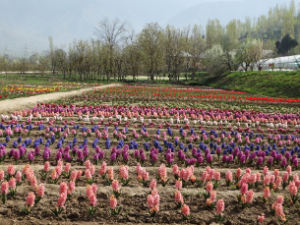
The plight of Kashmir’s floriculture is a microcosm of the global climate crisis. Despite the challenges, the floriculture industry has to adopt innovative approaches to combat climate change. Farmers can take up greenhouse cultivation to have better control of temperature and humidity and drought-resistant flower crops along with precision farmingsi88 practices like drip irrigation etc. The modern approaches like roof and vertical gardening can play an important role in improving air quality, and reducing surface temperature in the built environment, costs for heating or cooling of building and noise pollution. Interior landscape plants are also useful to enhance indoor environmental quality and improve workplace efficiency. Development of public parks and lawns enriched with native flora improves air quality, mitigate health risk and maintain species diversity. The AI-powe88vred systems can also be used to monitor and optimize the growing conditions of high value crops. Therefore, the future of Kashmir’s floriculture depends on collaborative efforts across all sectors. Policymakers, researchers, and industry leaders must join their hands to work together to execute policies and practices that promote sustainability and protectSEXXXXX-VNion of the region’s floral heritage and tourism industry associated with it.
The authors are faculty at SKUAST-K’s Division of Floriculture and Landscape, Shalimar. zahoor.rthr@gmail.com

BK News
Srinagar: The jin88bet.onemonth-long Training of Trainers (ToT) program for Farmer Producer Organizations (FPOs), organised by Sher-e-Kashmir University of Agricultural Sciences and Technology of Kashmir (SKUAST-K) and Agriculture Department in collaboration with the National Institute of Agricultural Extensiak168app.babyon Management (MANAGE), Hyderabad, concluded successfully, marking a major milestone in capacity building for agricultural transformation in Jammu and Kashmir.
The program brought together some of India’s foremost agricultural businak168app.clubess experts to train nearly 300 resource persons in eight batches. Designed under SKUAST-K’s HADP Project 20: Innovative Approaches for Promoting Agriculture in J&K, the initiative aimed to strengthen farmer organizations such as FPOs, Self-Help Groups (SHGs), Common Interest Groups (CIGs), and Primary Agricultural Credit Societies (PACS). The program covered topics like Fks168app.sitePO formation, business planning, supply chic88ain management, and market linkages.
 The valedictory session, held at SKUAST-K’s Shalimar Campus, was attended by Director Agriculture Kashmir, Chowdhary Mohammad Iqbal, who commeic88nded the university’s efforts in empowering trainers to lead grassroots-level transformation. He encouraged the participants to utilize their skills to create resilient and sustainable farmer organizations, emphasizing the need ic88for market-oriented and collective farming practices.
Vice-Chancellor SKUAST-K, Prof Nazir Ahmad Ganai, who actively monitored the program, in his message stressed the importance of FPOs in transitioning J&K from subsistence farming to sustainable commercial agriculture. Drawing comparisonsic88 with advanced economies, he highlighted the urgent need to increase agricultural processing, which currently stands at just 2% in the region.
Prof Masood Saleem Mir, Associalr88te Director Research and Principal Investigator of the HADP Innovative Extension Project, elaborated on the program’s objectives and logistics. “This training was desilr88gned to address the unique challenges faced by farmer organizations in J&K. By equipping participants with technical, managerial, and entrepreneurial skills, we aim to create a ripple effect where these trainers will mentor and guide farmers across the region,” he said. Prof Mir further highlighted the strategic collaboration with MANAGE Hyderabad and the Agriculture Productiolr88n Department, which ensured the program’s success.
“Our aim is not just to train individuals but to build a system where farmers can access consistent support and practical solutions for their challenges. lr88The comprehensive curriculum, covering everything from FPO formation to business sustainability, is tailored to meet the region’s specific needs,” Prof. Mir added.
The training, facilop88itated by MANAGE Hyderabad, featured country’s top expert in FPO formation, business planning and supply chain management. These experts provided strategic insights into FPO management, business sustainability, and innovative mobilization techniques, ensuring practical outcomes for the participants.
Participants praised the program for its practical orientation, stating that it had dsi88emystified the complexities of building successful FPOs. Many called for follow-up sessions focused on developing tailored, commodity-based business plans to enhance FPO ef88vfectiveness.
This initiative aligns with SKUAST-K’s vision to make J&K a model bioeconomy in the country, fostering a resilient and sustainable agricultural landscape. The university plans to replicate the program in the Jammu division, further extending its imSEXXXXX-VNpact.
The event concluded with the distribution of certificates to the trainees and a pledge by all stakeholders to work collectively towards uplifting the region’s farming community.


Blossom at Risk | Climate Change and Its Impact on Floriculture

Ethical Consumerism And Organic Market Nexus

SMHS incident: When hope turns to rage

RBI penalises Central Cooperative Banks Baramulla, Anantnag for violations

Editorial | J&K Budget 2025-26 – A Balancing Act

Building FPO Leaders: SKUAST-K, MANAGE Hyderabad complete trainers’ training

CII J&K Organizes Health Conclave 2024

SKUAST-K to hold mega Science Summit on Aug 23-24

Haryana Biodiversity Board commemorates International Biodiversity Day at GNK Group Of Institutions

Kya kuchh tha jiske kehne ko: A tribute to father
-
 Industry6 years ago
FCIK hails LG Sinha for creating entrepreneur-friendly industrial ecosystem
-
Economy4 years ago
Global eCommerce boom and local traders of Kashmir
-
Energy6 years ago
Lt Governor discusses J&K power scenario with experts
-
Infra6 years ago
SKUAST-K bags EU project for urban green infrastructure
-
Review6 years ago
Scam 1992: Story of the Big Bull of Share Market
-
AgriBiz6 years ago
SKUAST-K to set up 3 honey testing labs in Kashmir
-
AgriBiz5 years ago
Persimmon Cultivation: A cash crop to explore in J&K
-
Industry6 years ago
Imran Murtaza takes oath as president Industrial Association Khunmoh